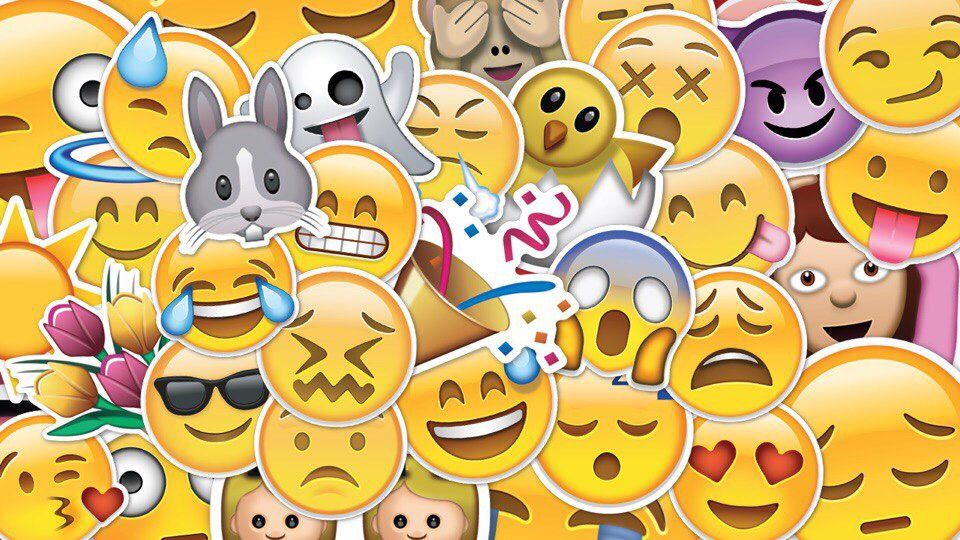
Every year on World Emoji Day, our timelines fill with tiny icons expressing everything from excitement and celebration to confusion and coffee cravings.
But behind the fun is something much more interesting: emojis (and illustration as a whole) have become one of the closest things we have to a universal language.
Whether you’re scrolling social media, navigating an app or opening a website, visuals help us understand information faster than words alone ever could.
Which, for designers, can be incredibly powerful.
More than just a smiley face
Emojis have evolved far beyond playful additions to text messages. Today, they’re embedded in the way we communicate online, helping to add tone, emotion and context that written words can sometimes miss.
Think about the difference between these two messages:
“Great.”
“Great! 😊”
The words are identical, but the meaning feels completely different.
That’s because our brains naturally interpret visual cues alongside language.
A single emoji can soften a message, reinforce a point or instantly communicate an emotion without needing a lengthy explanation.
Good design works in exactly the same way.
Emojis prove simple can be powerful
If emojis have taught us anything, it’s that communication doesn’t have to be complicated.
Sometimes the simplest visual can carry the strongest message.
A thumbs up.
A lightbulb.
A heart.
A warning sign.
Each communicates an idea almost instantly.
Great designers apply exactly the same principle. They strip away unnecessary complexity and focus on creating visuals that are immediately understood.
Because if someone has to stop and work out what your design is trying to say, you’ve already lost valuable attention.
A language without words
One of the biggest strengths of illustration is its ability to cross language barriers.
While written copy often requires translation, carefully considered visuals can communicate ideas to people regardless of the language they speak.
Whether it’s an icon showing where to recycle, an illustration explaining a process or a simple symbol guiding someone through an interface, visual communication removes friction.
This doesn’t mean illustrations replace words altogether. Instead, they work alongside them, making information quicker to absorb and easier to remember.
Why illustration makes better design
Good illustration isn’t about making something look prettier (although that’s certainly a core bonus).
It’s about helping users understand, engage and connect with a brand.
Illustration can:
- Simplify complex information.
- Create emotional connections with audiences.
- Make interfaces feel more intuitive.
- Reinforce brand personality.
- Improve accessibility by supporting written content.
- Increase engagement across digital platforms.
Whether it’s a bespoke character bringing personality to a website or a set of simple icons helping users complete a task; illustration gives people confidence in what they’re looking at.
Designing for everyone
Inclusive design isn’t just about accessibility features or readable typography.
It’s also about creating experiences that feel intuitive to as many people as possible.
Illustration can help support users with varying literacy levels, those navigating a second language and people who simply process information more visually.
Combined with clear copy and accessible design principles, thoughtful illustrations make digital experiences more welcoming and easier to use.
World Emoji Day is a reminder that the smallest visuals can have the biggest impact.
Whether it’s an emoji adding warmth to a conversation or a custom illustration bringing clarity to a website, visual communication helps people understand, connect and remember.
Because when words aren’t enough, a picture often says exactly what’s needed.